Nairobi National Park
Nairobi National Park
Size: 117 Km Sq (45 Sq mi)
Location: Nairobi County.
Established in 1946.
Location: Nairobi County, Nairobi.
The Nairobi National Park is one of a kind National Park in the world. It is the closest National Park to a Capital city and Nairobi is the Kenya’s Capital City.
The elevation in the park is on average between 1,533 m and 1,760 m (5,030 ft and 5,774 ft). The Park has a diverse range of habitats and distribution of wildlife species as the Athi-Kapiti ecosystem which is inside the park takes up to some 10% of the park. The rest of the ecosystem is located outside the National Park where one is likely to spot several animals species, mostly the herbivores. This is because the park is only fenced on the Northern, Eastern and Western boundaries leaving the Southern section as a wildlife corridor. The Mbagathi river is located on the southern section of the park towards the Kitengela Conservation area which has a relatively high concentration of ungulates movement around the area.
Flora and Fauna.
The habitat in the park mostly consists of open grassland with scattered Acacia bushes, woodlands sections and the dry forest to the western of the park. On this section, several flora species include the Olea Africana (A subspecies of the olive tree which until very recently, it was considered a different species), Croton dichogamus and calodendrum (calodendrum is a genus of medium-sized evergreen trees comprising of two species in Africa, Calodendrum capense or the cape chestnut and the calodendrum eickii which is a re tree species from Tanzania.
The much lower section in inhabited by grasslands with such species distributed.
- Themeda (A genus of plant in the grass family native in Asia, Australia, Africa and Papuasia.
- Cypress (A common name for various coniferous trees and shrubs of the Northern temperate regions that belong to the family Cupressaceae. The word cypress is derived from the Old French cipres which is imported from Latin.
- Cyododon (This is a genus of the plants in the grass family and native to some warm temperate to tropical regions of the Old World. The genus name comes from Greek words meaning,
“Dog-tooth”. The genus as well as its species is commonly known as Bermuda grass or dog tooth grass.
- Acacia Xanthophlea (Yellow backed acacia tree) – mostly growing by the river Mbagathi and other available creeks.
- Doum palms – Growing by the available natural streams in the park.
- Ficus eriocarpa
- Euphorbia candelabrum
- Aspilia mossambicensis
- Rhus natalensis
Amongst other flora species.
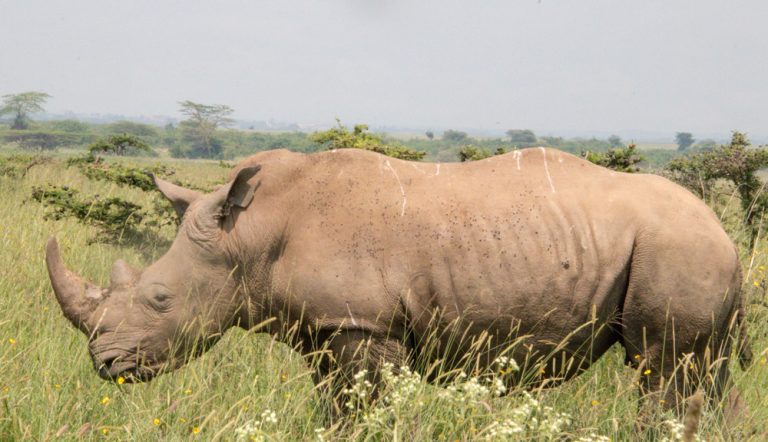
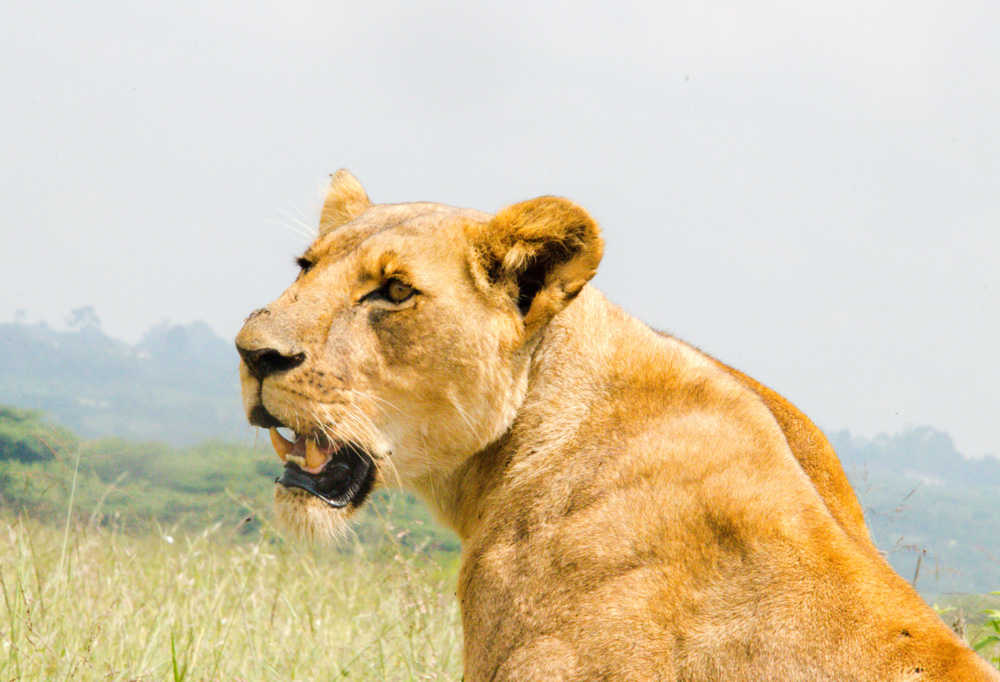
In terms of the fauna distribution, the Nairobi National Park is home to predators like the lions, cheetahs, black-backed jackals, spotted hyaenas, Maasai ostrich, Nile crocodiles, Grants gazelles amongst other smaller predators too. The park is also home to a long list of the herbivores amongst them plains zebras, Maasai giraffes, black rhinoceros, Impala, Thompson gazelles, Coke’s heartbeats, common warthogs, hippopotamus amongst others.
To the extreme edge of the park, there is an elephant Orphanage by the name the Daphne Sheldrick wildlife Trust which is home to the rescued baby elephants who are rescued from different parts of the country, nursed at the center, and later re-introduced back to the wild.
The visit to the center is available only upon making a prior reservation and our consultants will guide you through should you wish to access the facility.
Ready for the Nairobi National Park trip?
What we Provide for the Day Trip.
- Transportation two way in a comfortable, Air-conditioned safari vehicle.
- Sufficient drinking water and soft drinks.
- WI-FI connection in our safari vehicle.
- Park fees
- Branded reusable water bottle to dispense water during the Tour.
- Lunch and one soft drink.
- Wildlife Literature in the vehicle
- Pairs of Binoculars for each guest.
- Writing materials.
- Basic Hygienic amenities, (Tissue Papers, Hand Sanitizers, wipes, and disposable bags)
- Travel Insurance
Please Note:
Additionally, we shall offer Kitengela Glass upon request at an extra cost to be shared by your travel consultant during the booking process.
Day trip to Nairobi National Park?
What to carry:
Here is what to pack.
Any other personal belongings NOT listed on “What we provide list”.
Sunglasses
Safari hat
Hiking boots
Sunscreen (If need be)
Camera or Phone – (To capture the moments)