
Amboseli National Park

Gazetted: 1974
Size: 392 Sq. km
Formerly known as Maasai Amboseli Game Reserve.
This is a national park in Kajiado County, Kenya. It is 39,206 ha (392.06 km2) in size at the core of an 8,000 km2 (3,100 sq mi) ecosystem that spreads across the Kenya-Tanzania border. The local people are mainly Maasai people but people from other parts of the country have settled there attracted by the successful tourist-driven economy and intensive agriculture along the system of swamps that makes this low-rainfall area, average 350 mm (14 in), one of the best wildlife-viewing experiences in the world with 400 species of birds including water birds like pelicans, kingfishers, crakes, hamerkop and 47 raptor species recorded.
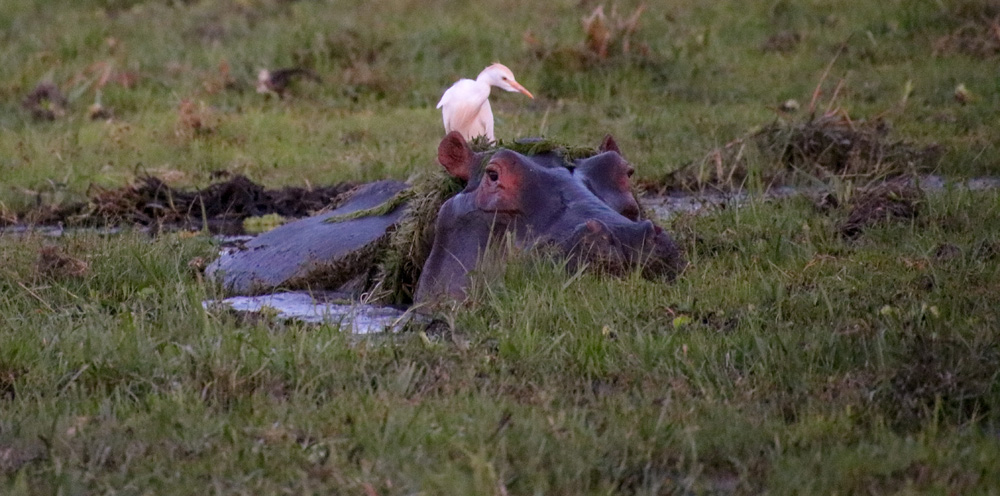
Hippo grazing in Amboseli National Park
The park protects two of the five main swamps and includes a dried-up Pleistocene lake and semiarid vegetation.
The name of the Park is derived from the Maasai word Empusel (meaning ‘salty, dusty place’ in Maa).
Amboseli was set aside as the Southern Reserve for the Maasai in 1906 but returned to local control as a game reserve in 1948. Gazetted a national park in 1974 to protect the core of this unique ecosystem, it was declared a UNESCO site in 1991. On 29 September 2005, Kenyan President Mwai Kibaki declared that control of the park should pass from the Kenya Wildlife Service to the Olkejuado County Council and the Maasai tribe. Some observers saw this as a political favour in advance of a vote on a new Kenyan constitution; legal challenges are currently in court. The degazetting would divert park admission fees directly to the county council with shared benefits to the Maasai immediately surrounding the park.
The park is famous for being the best place in the world to get close to free-ranging elephants. Other attractions of the park include opportunities to meet Maasai and visit a Maasai village. The park also has views of Mount Kilimanjaro, the highest free-standing mountain in the world.
Amboseli was home to Echo, the most researched elephant in the world, and the subject of many books and documentaries, followed for almost four decades by American conservationist Dr. Cynthia Moss. Echo died in 2009 when she was about 60 years old.
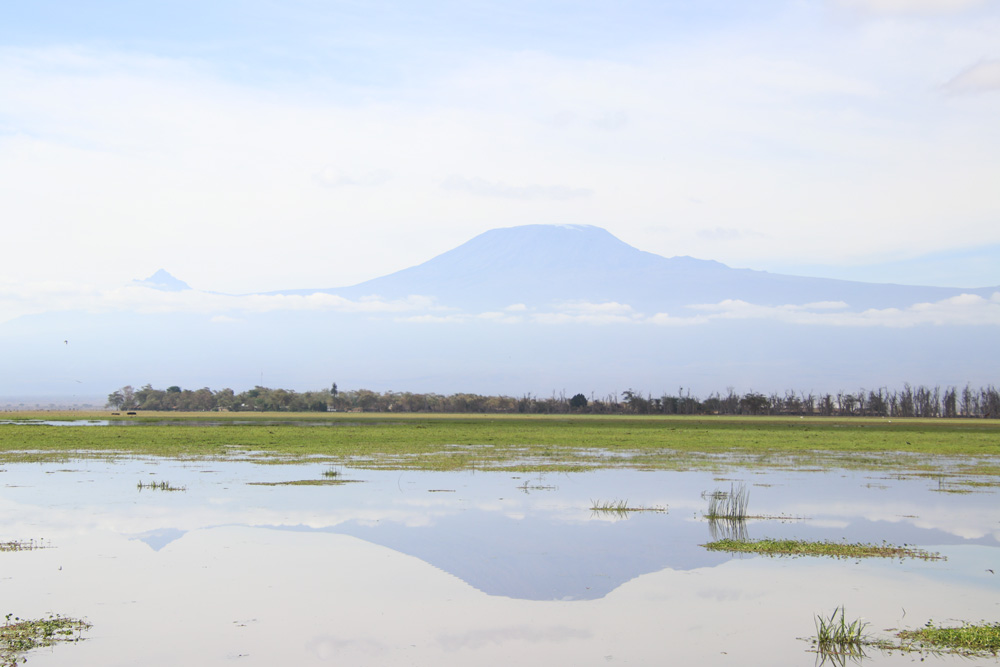
Mount Kilimanjaro View from Amboseli National Park
The park was also a haven to an incredible bull elephant named Tim. This mighty leviathan quickly became one of the major attractions with his size and iconic tusks that reached the ground and was estimated to be around 50 years old at the time of his death from natural causes on 5 February 2020.
Amboseli National Park offers some of the best opportunities to see African wildlife because the vegetation is sparse due to the long, dry months. The protected area is home to African elephant, Cape buffalo, impalas, lion, cheetah, spotted hyenas, Masai giraffes, Grant’s zebras, and blue wildebeests. A host of large and small birds occur too.
The park has several rules to protect the wildlife:
Never leave the vehicle, except at designated spots.
Do not harass the animals in any way.
Always keep to the track, no off-road driving.
(d) Always give the animals the right of way.
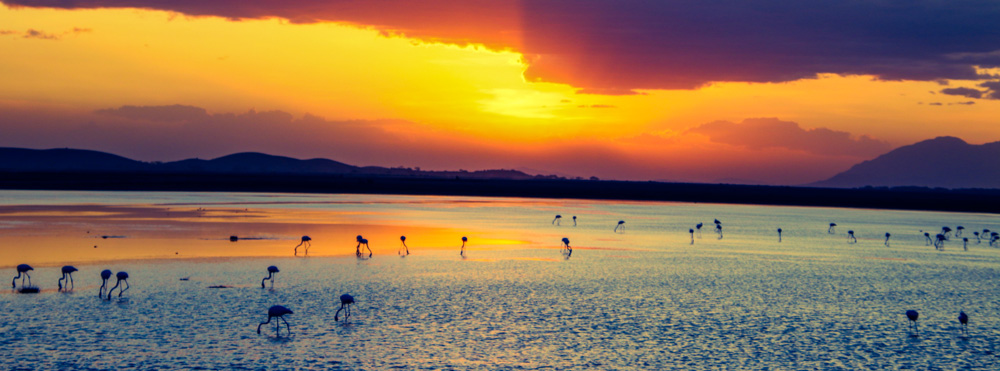
Greater flamingos by the sunset in Amboseli National Park
The roads in Amboseli have a loose surface of volcanic soil that is dusty in the dry season and impassable in the wet season.
The Park is accessible via a small airport is in Amboseli, the Amboseli Airport (HKAM), alternatively one can easily drive from Nairobi about 4 hours away.